

Leasehold Buildings Insurance UK: 5 Honest Methods to Avoid Hidden Costs
UK leasehold apartment buildings require comprehensive buildings insurance arranged by the freeholder
If you are standing in the hallway of your flat and looking at a water stain spreading across the ceiling, your first thought is probably who is going to pay for the repair.
In practice under UK law, the freeholder is almost invariably responsible for insuring the physical structure of a leasehold property and will recover the cost through the service charge from the leaseholders. In general, leaseholders are only obliged to insure the contents of their own flat. Ask an FCA authorised insurance broker or adviser for a recommendation tailored to your situation.
Key Takeaways
- The freeholder is almost invariably responsible for insuring the physical structure of a leasehold property and will recover the cost through the service charge from the leaseholders.
- Insurance companies are now legally obliged to give you a summary of the policy, a full explanation of what it covers, and what it will cost if you request it.
- In England and Wales, it is no longer permitted to recover these broker commissions via service charges, according to Sections 59 to 64 of the Leasehold and Freehold Reform Act 2024.
- Leaseholders can challenge unfair charges at a tribunal and take management powers away from a negligent landlord by forming a Right to Manage (RTM) company.
1. What is Leasehold Buildings Insurance?
Understanding leasehold buildings insurance simply in the UK is the first step to knowing your rights as a flat owner. This type of policy, often referred to in regulatory terms as multi-occupancy buildings insurance, insures the whole block or structure, not individual flats. In a standard leasehold, you have the right to occupy your flat for a fixed number of years, but the freeholder owns the land and the physical structure.
The Financial Conduct Authority (FCA) has introduced strict FCA rules under ICOBS 6A.7, effective from December 31, 2023, requiring insurance companies and brokers to treat leaseholders as policy stakeholders and active customers.
Key Takeaway: Insurance companies are now legally obliged to give you a summary of the policy, a full explanation of what it covers, and what it will cost if you request it. Landlords can no longer hide policy details from the people who actually pay the bills.

Leaseholders have the right to request full policy information from their freeholder under FCA regulations
2. Do I Need Buildings Insurance if I Own a Leasehold Flat UK?
The short answer is normally no, provided your freeholder has taken out a comprehensive block policy as required by your lease agreement.
Think of it as classic consumer advice: imagine flipping your flat upside down to understand what you need to cover:
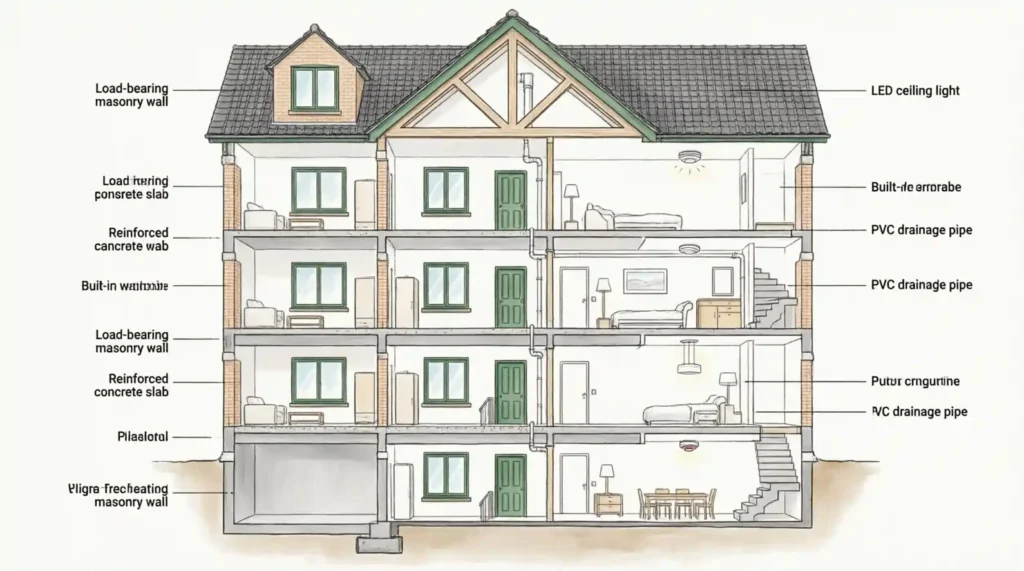
- The Freeholder’s Buildings Insurance: Covers anything that is fixed—the walls, ceilings, built-in bathroom fittings, and structural elements.
- Your Contents Insurance: Covers your personal, loose items—such as furniture, electronics, carpeting, or clothes.

Understanding what’s covered: structural elements (freeholder’s responsibility) vs personal contents (leaseholder’s responsibility)
Being underinsured for your contents can be disastrous. If you only insure for half the true value of your contents, you may find that under normal UK average clauses, you will only be entitled to receive half the value of your claim from your insurer.
For a full structural breakdown, check out our PolicyCheck article on home insurance contents and buildings.
3. Commission on Leasehold Buildings Insurance Banned in 2026?

Without proper buildings insurance, leaseholders face significant financial risk from property damage
A big question for leaseholders facing high service charges is whether commission for leasehold buildings insurance is banned in 2026. Historically, brokers paid large hidden commission payments to landlords and managing agents in exchange for placing policies, massively inflating leaseholder premiums.
In England and Wales, it is no longer permitted to recover these broker commissions via service charges, according to Sections 59 to 64 of the Leasehold and Freehold Reform Act 2024, which comes fully into force in April 2026.
Instead, landlords must charge transparent, itemised “permitted insurance fees” for actual administrative tasks, like sharing risk data or processing claims.
⚠️ The Catch: These allowed fees are charged at the higher rate of VAT of 20%, compared to the lower Insurance Premium Tax (IPT) rate of 12% for normal premiums.
Structural Comparison: Old Commission vs. New System
Transparency
Very opaque, lost in premium service charges.
Fully transparent, itemised, reasonable, and proportionate.
Fee Basis
Percentage of premium, often over 30%.
Based on actual tasks performed (claims, risk information).
Tax Implications
12% Insurance Premium Tax (IPT).
20% VAT on allowable fees.
Dispute Rights
Little recourse for leaseholders to dispute charges.
Leaseholders can challenge unfair charges at a tribunal.
4. What If The Freeholder Doesn’t Insure The Building UK?
If you find your building is not covered, you need to act fast. By failing to insure the structure, the freeholder is in direct breach of the lease contract.
You can take the following legal actions:
- Ask a First-tier Tribunal to make an order that the freeholder must comply.
- Appoint a receiver to manage the building.
- Seek financial compensation.
Under the Leasehold and Freehold Reform Act 2024, tribunals can order prohibited charges to be repaid and fine landlords up to three times the amount wrongly charged. Alternatively, leaseholders can take management powers away from a negligent landlord by forming a Right to Manage (RTM) company to take direct control of procuring their own buildings insurance.

stokes tiles family financial lawsuit
5. PolicyCheck’s Recommendations: 3 Practical Tips for Leaseholders
Our analysis of FCA regulations and the latest housing reforms highlights that leaseholders need to be proactive. Most overcharging disputes in England and Wales occur simply because leaseholders never requested their policy summaries.
- Request Documentation: Write to your freeholder for your Leaseholders’ Policy Information Summary and a full breakdown of any commissions paid.
- Review Your Lease: Confirm the exact percentage or portion of the buildings insurance you are contractually obligated to pay.
- Benchmark Your Costs: Is your service charge reasonable? Cross-reference your costs with the Leasehold Advisory Service or Citizens Advice.
If you need advice on your personal situation, it is best to speak to an insurance broker or adviser authorised by the FCA.
FAQ
Is buildings insurance mandatory for a leasehold flat?
Buildings insurance is not a legal requirement under UK law, but it is almost invariably compulsory under the terms of your lease agreement and by your mortgage lender. If your building has no insurance, you are in breach of contract and risk property repossession.
What is the difference between leasehold buildings insurance and contents insurance?
Leasehold buildings insurance covers the physical structure of the property (including the roof, walls, and communal areas) and is arranged by the freeholder. Contents insurance covers your personal possessions inside the flat (furniture, clothing, appliances), which you must purchase yourself.
What if my leasehold building is damaged and there is no insurance?
The freeholder is in breach of the lease. The immense cost of rebuilding would have to be paid out of pocket, inevitably leading to severe legal battles, tribunal claims, and the inability to sell or remortgage any flat in the block.
Are landlords allowed to make a profit on leasehold buildings insurance?
No. FCA rules and landlord-tenant legislation allow landlords to recover only the actual, reasonable cost of the insurance premium. The 2026 rules require any administrative “permitted insurance fees” to be reasonable, proportionate, and cost-reflective not a hidden profit margin.